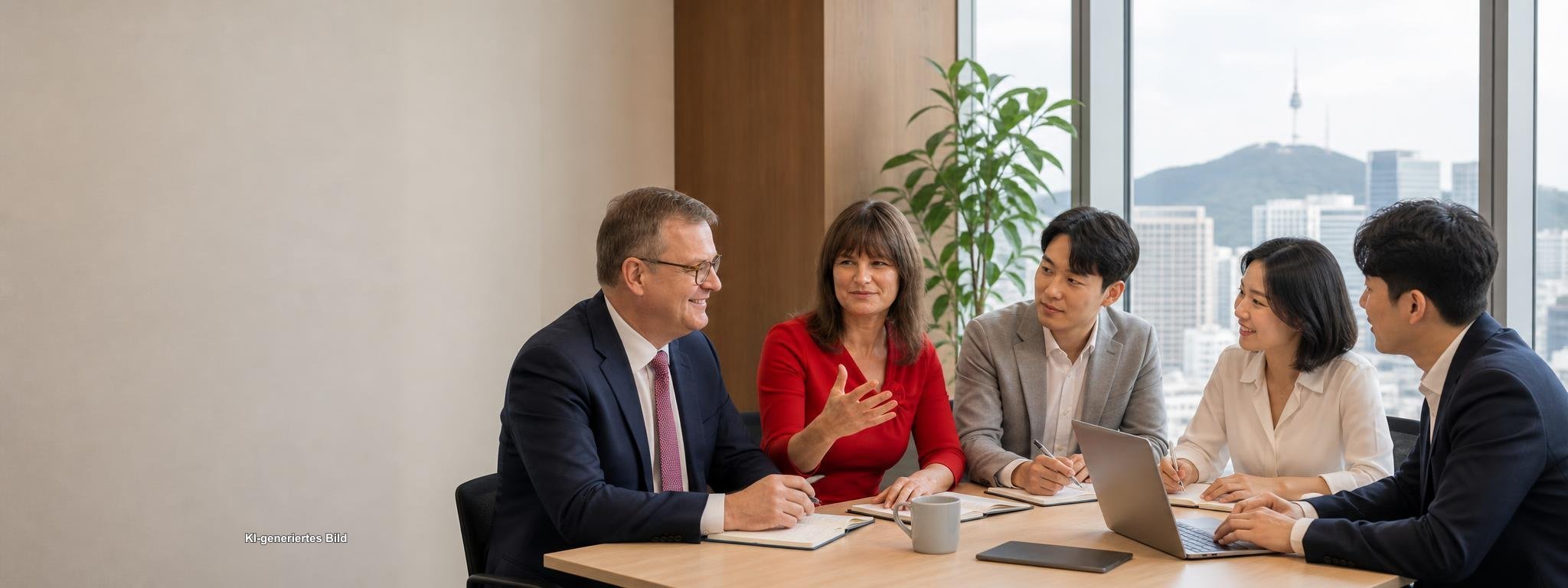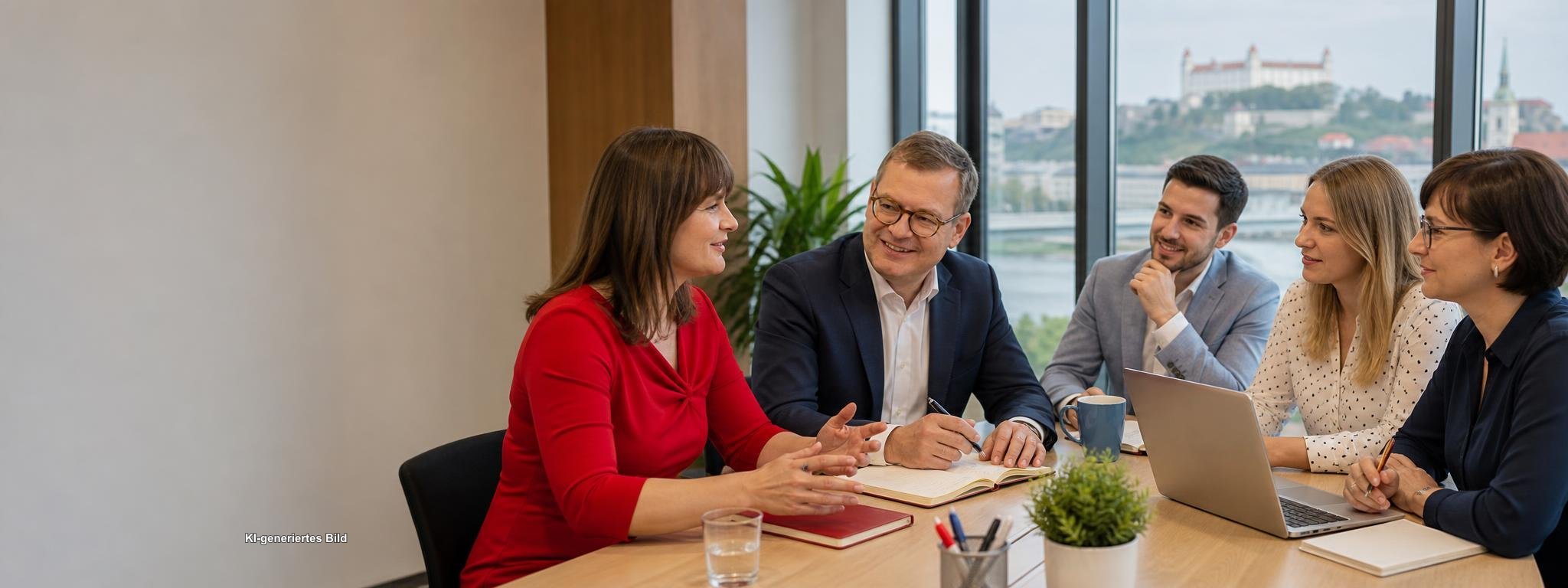



Intercultural training Japan: 200 experts from
business practice

In-house Training Japan

Seminar content: Intercultural training Japan

The following suggested key topics provide an overview of possible training content. The contents are mutually agreed upon and tailored to the individual needs of your company and participants.

Open training Japan

An open training is open to all interested parties. People from various companies, institutions or private individuals can participate.

Training locations:
Hanover / Munich / Stuttgart / Frankfurt / Berlin / Hamburg / Düsseldorf / Cologne / Vienna / Zurich AND ONLINE

Dates:

Investment:
3,490.- Euro plus VAT per participant.
From 2 participants from the same company: 2,490 euros plus VAT / participant.

In order to best accommodate our clients and offer high added value, we conduct open intercultural seminars Japan in selected cases even with one participant.

Specific training Japan

Global Cultures

Academy for Intercultural Management

+49 6195 969 34 06
Frankfurt
+49 800 181 51 15
Munich
+49 800 181 51 15
Stuttgart
+49 800 181 51 15
Hamburg
+49 800 181 51 15
Düsseldorf
+49 800 181 51 15
Cologne
+43 1 229 74 06
Vienna
+41 43 508 03 71
Zurich
Testimonials

Practical tips for efficient intercultural collaboration

Intercultural training Japan

Between the conference room and karaoke, intercultural training in Japan makes it clear what really matters in both cases – and how you can get your Japanese business partners on your side. Despite economic and demographic problems, the Land of the Rising Sun is still the most prosperous society in Asia. The global integration of Japanese companies, its leading position in high-quality consumer goods and its huge domestic market make Japan a global player in the concert of economic powers. However, the Japanese communication style differs enormously from that of most Western European countries. In order to do business successfully in Japan, it is essential to know and take into account cultural differences and to adhere to certain rules in business life. With intercultural training in Japan from Global Cultures, you will learn what is important.

Why us: Experts from the business world

  • They are Japanese or have lived and worked in Japan for a long time – they have absorbed the specifics of the Japanese market “with their mother’s milk”, so to speak, or have experienced them at first hand
  • You have several years of professional experience in management or other senior positions in Japan
  • Their high level of methodological competence guarantees a fast and efficient transfer of know-how for our customers
  • Certification as intercultural trainers from renowned international institutes
  • Training and certification as a business coach
  • Training and experience as systemic organizational developers
  • This is how we ensure the quality standards that not only we have for ourselves, but also our customers have for us.
  • Your professional qualifications ensure a targeted and professional structure of our seminars for the rapid and efficient acquisition of intercultural competence

Trust between future business partners – intercultural training Japan

In Japan, even experienced businesspeople have to know how to deal with numerous intercultural misunderstandings. Especially for people who want to establish new business relationships, a great deal of patience is required in order to actually achieve the goals set. Interculturally speaking, Japan is one of the more collectivist countries. Above all, this means that trust is built up very slowly with strangers. With the right know-how, which you will acquire in intercultural training in Japan, you will increase your chances many times over.

Mastering the challenges of intercultural communication through intercultural training in Japan

Without intercultural training in Japan, successful communication is usually left to chance, as the communication style, cooperation and expectations in Japan are very different from what we are used to. The indirect communication style of the Japanese is often strange and difficult to decipher for Western Europeans. As a result, these projects are usually more time-consuming than in a mono-cultural company. In most cases, this leads to higher project costs. Furthermore, potential customers are often lost to the competition, which uses well-considered intercultural strategies. In an intercultural training course in Japan from Global Cultures, you will also learn how to correctly decode indirect statements and how to formulate such messages yourself.

Intercultural training Japan – success through targeted communication

In intercultural training Japan, you will learn how to significantly increase your efficiency in communicating with the Japanese. You will also significantly improve employee motivation and loyalty. After our practice-oriented intercultural training in Japan, there will be fewer misunderstandings in communication. You will also develop a deeper understanding of the mentality of Japanese colleagues and business partners.

Culture-specific facial expressions and gestures are often underestimated

In cultures where an indirect communication style prevails, it is often the “little things” that can ruin an initially promising business relationship. Even unconscious gestures, such as shaking hands, can become an affront. In intercultural training in Japan, you will learn how to avoid such misunderstandings and how to save the relationship should it become necessary.


Clear lead – leaving competitors behind

Intercultural training Japan enables you to gain a noticeable advantage over your competitors. You can therefore also benefit from the intercultural competence you gain from intercultural training in Japan in the long term, e.g. in other international projects.

Global Cultures – the academy for practical intercultural training Japan

Global Cultures offers you a wide range of services – from general intercultural training in Japan for short-term projects abroad to industry-specific intercultural troubleshooting. Our training courses are specially tailored to the requirements of international companies and corporations. In all our intercultural training courses in Japan, we place particular emphasis on the benefits for day-to-day business.

Lecturers with international experience from the private sector

Our international experts come from the private sector and are therefore very familiar with the requirements of day-to-day business. The basic requirement for our instructors is many years of experience with the respective target country. Our experts for our intercultural training in Japan either come directly from Japan or have several years of professional experience in the country. Our customers can thus benefit from direct experience from economic practice.

A good solution for many countries – our intercultural training is practical for 112 countries.

Global Cultures – Academy for Intercultural Management offers you a broad spectrum of: intercultural training and intercultural coaching — from general preparation training for short-term projects abroad to exclusive seminars and industry-specific intercultural troubleshooting. Intercultural training from Global Cultures is specially tailored to the requirements of internationally active companies and corporations. We place particular emphasis on the benefits for everyday business. Your employees learn how to deal with the other culture and can thus better respond to intercultural peculiarities.

Global Cultures

Academy for Intercultural Management

+49 6195 969 34 06
Frankfurt
+49 800 181 51 15
Munich
+49 800 181 51 15
Stuttgart
+49 800 181 51 15
Hamburg
+49 800 181 51 15
Düsseldorf
+49 800 181 51 15
Cologne
+43 1 229 74 06
Vienna
+41 43 508 03 71
Zurich
Hochstraße 1
D-65779 Kelkheim

Request now

1. Why do 70% of international cooperations fail due to intercultural problems?
  • Enormous losses and damage to image due to inadequate intercultural preparation / intercultural training Japan - examples of failed projects and joint ventures in Japan
  • Typical mistakes that can be avoided through intercultural training in Japan: Analysis and lessons learned
  • How to be one of the best: tactics and action strategy
2. intercultural competence as the key to business success
  • Why is extensive knowledge of Japanese history, culture and politics necessary for intercultural business success? What do you need to know to build a profitable long-term business relationship?
  • How an understanding of the Japanese mentality enables a noticeable increase in competence and a clear competitive advantage in business with Japan
  • Why is it necessary to build a solid, long-term and people-oriented relationship in Japan? What dangers are hidden behind a factual attitude typical of Western Europe? Clarifying the appropriate strategies for action in intercultural training in Japan
  • How do hierarchies and role perceptions in Japan differ from those in Western Europe: opportunities and risks
3 Japan - Fiction and truth

What influence does the Japanese mentality have on intercultural cooperation?

  • Group ideology: How has rice farming culture influenced the sense of belonging and the orientation towards harmony? What consequences in modern industrial society should you consider in order to achieve success in business in Japan?
  • The samurai as role model: How has the unconditional classification of the individual and the overcoming of the ego shaped today's Japanese mentality? Tactics for avoiding gross mistakes in intercultural training Japan
  • Influence of religions: How have Shintoism, Confucianism and Buddhism shaped the Japanese tendency towards employee loyalty to the business and acceptance of existing management structures? What conclusions can you draw for your Japanese business to avoid common pitfalls?
  • Harmony: How has the acceptance of force of nature shaped the Japanese tendency towards artificial equality and symmetry in society and business? What should you pay particular attention to in this regard?
  • Influence of the Japanese language on mentality: How does the language influence the Japanese thought structure? Why do verbs and nouns change depending on the rank of the interlocutor? What are the enormous differences between the Japanese and "Western" way of thinking?
  • Family concept: How has the family concept been transferred to corporate philosophies? How does the Japanese attitude towards employees differ from the "Western" one? What critical points do you need to consider?
  • Changing values: What influence do globalization, the media and international activities of Japanese companies abroad have on the changing values of the Japanese? What should you bear in mind when communicating with representatives of younger and older generations?
4. culture and business: comparison with Western European target countries
  • Status and hierarchy: Efficient techniques to improve communication and achieve good results.
  • Individualism vs. group harmony: What should you pay attention to in order to operate efficiently in Japan?
  • Emotionality vs. neutrality: How much emotion can you show in a business context in order to achieve success in business with Japan?
  • Punctuality vs. time flexibility: How do you benefit from the professional combination of Japanese and Western attitudes to time management?
  • Direct vs. indirect communication: How do you quickly read between the lines?
  • Performance and relationships: How do you combine both? What dangers does understatement hide? Specific tips for intercultural training in Japan
5. business success - practical suggestions

1. professional communication:

Verbal communication

  • Honne and tatemae - inner truth and outer form: How do Japanese people distinguish between genuine feeling and thinking (= Honne) and what is said in public (=Tatemae)?
  • How do you learn to formulate messages and requirements indirectly but clearly, without the Japanese losing face and you losing business?
  • Japanese thinking of "encirclement" as information perception: What proven tactics are there to make written communication efficient and effective?
  • What dangers arise from constructive criticism based on the Western European model: solution strategies for Japan.
  • How do you learn to read between the lines quickly? Do words have the same meaning in communication in Japan as they do in Western Europe?
  • 10 forms of "yes": What tactics are there to reliably decipher whether "yes" actually means "no"?

Non-verbal communication:

  • Haragei - "The Art of the Belly" '=" The Art of Silence": "Being able to remain silent" is an important prerequisite for success in the Japanese business. What messages does silence convey? What does breaking the pause mean in Japan? How do you recognize when the break is over? What skills should you learn in order to use the silence tactic successfully?
  • What is not said is more important than what is said: Why do Japanese people rely less on language as a means of communication? What essential skills do you need to develop in order to interpret the messages correctly and respond to them appropriately?
  • In Japan, smiling not only expresses joy, but is also associated with sadness, embarrassment, confusion or anger. How do you correctly identify what smiling means in a given situation? How do you learn skills that are essential for success in Japan in order to use the "technique of smiling" appropriately?
  • Eye contact: What intensity of eye contact is common in Japan? How do Japanese people feel when you look them in the eye during conversations, as is customary in Western Europe?
  • Proxemics - Paraverbal communication: How do body distance, touching, volume and laughter differ in Japan and in Western European target countries? What should you pay particular attention to in order not to appear unprofessional
  • Tone of voice: The tone makes the music - How do you understand what is going on without having a good command of the language?

2. Successful negotiation

  • Preparing for negotiations: What should you know about negotiating partners? What role do "mediators" play?
  • Types of negotiation: Power, knowledge and relationships - what should you consider?
  • How do negotiations work? What should you pay particular attention to?
  • How long do individual phases of the negotiations take? How do the time frames differ from those in Western European target countries?
  • What role do contracts and agreements play in Japan? What are the fundamental differences to "Western" contract design? How do you deal with the differences
  • Proven strategies and tactics in intercultural training Japan

3. Business meetings and discussions

  • Preparation: What should you pay attention to so that meetings and discussions are conducted efficiently?
  • Time management: According to which special patterns do meetings and discussions take place?
  • Agenda: How do you ensure that the agenda is known to all participants?
  • Procedure: What special features should you bear in mind?
  • Follow-up: how do you ensure that the results are actually implemented?

4 Ringi Seido - Special features of Japanese decision-making

  • What principle is Ringi Seido based on? - Comparison of the advantages and disadvantages of intercultural training in Japan
  • How exactly are Japanese employees efficiently involved in the decision-making process?
  • Nemawashi and Ringi - How does communication between employees and different management levels work in Japanese companies?

5 Amae - Employee management and motivation in Japan

  • Amae: How do Japanese people use this attitude in terms of motivation and leadership?
  • How do you benefit from employee loyalty?
  • Which motivational factors are the strongest?
  • Role of the supervisor: Status and social responsibility - Efficient tactics in intercultural training Japan
  • Father or friend – Pros and Cons

6. types of conflict in Japan and their resolution strategies

  • What types of conflict arise most frequently in Japanese business?
  • Conflicts of goals and values: How do Japanese and Western Europeans from the target countries deal with them? What alternative solutions can you develop?
  • Conflicting methods: How do you react proactively?
  • Distribution conflicts: Define solution parameters in intercultural training Japan

7. successfully presenting and convincing

  • Structuring information: From the general to the specific - What does this difference mean for you when persuading and presenting? Why is it important to create a visionary overview?
  • How do presentation set-up strategies differ in Japan and Western European target countries? How do you localize your presentation to achieve the desired results?
  • How do you professionally use the technique commonly used in Japan to give Japanese people the impression that you came up with the solution yourself?

8. teamwork

  • How do you form and motivate well-functioning teams?
  • Cross-functional teams - communication as the biggest challenge: how should you proceed?

9 Successful communication with company headquarters

  • How do you create an understanding of Japanese challenges at company headquarters?
  • How do you explain that the "rules of the game" are different in Japan?
  • How can you turn Japan competence into a success factor for your own career?

10. men and women in business

  • What should you look out for?
  • What typical mistakes can you easily avoid?
6. business etiquette for business success
  • How do you make a good first impression in Japan - what should you bear in mind to avoid being seen as arrogant?
  • Clothes make the man: How do Japanese people judge a foreign business partner by his clothes?
  • Greeting: bow or handshake? What should you pay attention to in order to show respect and save face?
  • Business cards - what should be on them, what makes you look ridiculous? How do you present business cards correctly? How long should you read business cards?
  • Men and women - handshake or bow - when is what appropriate?
  • Gifts as an important part of initiating business
  • On what occasions do you give which gifts?
  • How do you decline expensive and exclusive gifts without endangering the business relationship?
  • At BUSINESS dinners, the Japanese make BUSINESSES: the roles of guest and host are practiced in intercultural training in Japan.
  • How to use business lunches to achieve success in difficult and problematic conversations: Strategies and tactics.
  • To drink or not to drink: What should you consider at a business dinner?
  • Geisha, bar visit, karaoke: Do you have to take part? What aspects should be considered?
7. corporate cultures and their influence on successful intercultural cooperation
  • 4 variants of corporate cultures, presented in detail in the intercultural training Japan
    • "Family" - power orientation: What essential aspects of this corporate culture are important to you in the Japanese business?
    • 'Eiffel Tower' – Role orientation: What opportunities and risks does this category hide?
    • "Guided missile" - project orientation: In which contexts is this variant expedient for your Japanese business?
    • "Incubator" realization: Which facets of this category are particularly essential for Japan?
  • Which combination of the 4 variants is most efficient for your company in Japan?
  • Which factors and risks regarding corporate culture should be considered?
8 Daily aspects - opportunities and challenges
  • Accommodation: What should you look out for when searching for accommodation?
  • Security:
    • Japanese security specifics
    • What do you do in the event of an earthquake?
    • Which authorities do you contact in the event of an earthquake?
    • Is it okay to go out in the evening as a man or as a woman?
    • Which areas should you avoid?
    • Important contacts to responsible authorities.
  • Medical care:
    • What do you do in a medical emergency?
    • In which pharmacies can you buy medication?
    • What measures should you take before traveling to Japan?
  • Schools and kindergartens:
    • Which schools and kindergartens are there?
    • What is the Japanese attitude to raising and educating children?
    • What are the expectations of teachers and parents?
  • Food and drink:
    • Which foods can you buy without hesitation, which should you best avoid?
    • Which types of drinking water are you allowed to buy? What should you pay attention to when buying?
    • Food in restaurants and canteens: Discussion in intercultural training Japan about hygiene, quality and possible risks
  • Leisure:
    • What are the sights worth seeing in the target regions?
    • What is the best way to get there? What should be considered in winter and summer?
    • What sports facilities are there?
9 Long-term success
  • 6 phases of developing intercultural competence
  • What qualities are crucial for adapting quickly to the working environment in Japan?
  • What difficulties will the family face - how can you alleviate them? Concrete assistance in intercultural training Japan
  • Culture shock - what can you do about it?
  • How long does the slightly depressive mood last and how do you deal with it?
  • How should partners and especially children deal with culture shock?
  • Back home - reintegration: opportunities and risks
  • Why do a third of seconded employees terminate their employment contracts before returning to their home country?
  • How do you prepare professionally for the return?
  • Which expectation regarding the next professional step is most productive?
  • Development of an individual action plan for each participant of the intercultural training Japan

Speaking of time. Employees often work within very tight time constraints. To maximize your benefits, our experts are also available to you at weekends or on public holidays. This allows you to make efficient use of valuable time. Just get in touch with us.

Jetzt anfragen

  • January 23-24, 2025
  • January 27-28, 2025
  • February 17-18, 2025
  • February 24-25, 2025
  • March 10-11, 2025
  • March 17-18, 2025
  • April 7-8, 2025
  • April 14-15, 2025
  • May 8-9, 2025
  • May 19-20, 2025
  • June 2-3, 2025
  • June 26-27, 2025
  • July 14-15, 2025
  • July 28-29, 2025
  • August 4-5, 2025
  • August 25-26, 2025
  • September 8-9, 2025
  • September 29-30, 2025
  • October 13-14, 2025
  • October 27-28, 2025
  • November 3-4, 2025
  • November 24-25, 2025
  • December 1-2, 2025
  • December 8-9, 2025

Sollten Sie an den genannten Terminen bereits anderweitige Verpflichtungen haben, kontaktieren Sie uns. Aufgrund der Nachfragesituation für interkulturelle Trainings Japan ergeben sich kurzfristig in vielen Fällen alternative Termine.

Um unseren Kunden bestmöglich entgegen zu kommen und einen hohen Mehrwert zu bieten, führen wir offene interkulturelle Seminare Japan in ausgewählten Fällen auch bereits mit einem Teilnehmer durch.

Jetzt anfragen

1. Why do 70% of international cooperations fail due to intercultural problems?
  • Enormous losses and damage to image due to inadequate intercultural preparation / intercultural training Japan - examples of failed projects and joint ventures in Japan
  • Typical mistakes that can be avoided through intercultural training in Japan: Analysis and lessons learned
  • How to be one of the best: tactics and action strategy
2. intercultural competence as the key to business success
  • Why is extensive knowledge of Japanese history, culture and politics necessary for intercultural business success? What do you need to know to build a profitable long-term business relationship?
  • How an understanding of the Japanese mentality enables a noticeable increase in competence and a clear competitive advantage in business with Japan
  • Why is it necessary to build a solid, long-term and people-oriented relationship in Japan? What dangers are hidden behind a factual attitude typical of Western Europe? Clarifying the appropriate strategies for action in intercultural training in Japan
  • How do hierarchies and role perceptions in Japan differ from those in Western Europe: opportunities and risks
3 Japan - Fiction and truth

What influence does the Japanese mentality have on intercultural cooperation?

  • Group ideology: How has rice farming culture influenced the sense of belonging and the orientation towards harmony? What consequences in modern industrial society should you consider in order to achieve success in business in Japan?
  • The samurai as role model: How has the unconditional classification of the individual and the overcoming of the ego shaped today's Japanese mentality? Tactics for avoiding gross mistakes in intercultural training Japan
  • Influence of religions: How have Shintoism, Confucianism and Buddhism shaped the Japanese tendency towards employee loyalty to the business and acceptance of existing management structures? What conclusions can you draw for your Japanese business to avoid common pitfalls?
  • Harmony: How has the acceptance of force of nature shaped the Japanese tendency towards artificial equality and symmetry in society and business? What should you pay particular attention to in this regard?
  • Influence of the Japanese language on mentality: How does the language influence the Japanese thought structure? Why do verbs and nouns change depending on the rank of the interlocutor? What are the enormous differences between the Japanese and "Western" way of thinking?
  • Family concept: How has the family concept been transferred to corporate philosophies? How does the Japanese attitude towards employees differ from the "Western" one? What critical points do you need to consider?
  • Changing values: What influence do globalization, the media and international activities of Japanese companies abroad have on the changing values of the Japanese? What should you bear in mind when communicating with representatives of younger and older generations?
4. culture and business: comparison with Western European target countries
  • Status and hierarchy: Efficient techniques to improve communication and achieve good results.
  • Individualism vs. group harmony: What should you pay attention to in order to operate efficiently in Japan?
  • Emotionality vs. neutrality: How much emotion can you show in a business context in order to achieve success in business with Japan?
  • Punctuality vs. time flexibility: How do you benefit from the professional combination of Japanese and Western attitudes to time management?
  • Direct vs. indirect communication: How do you quickly read between the lines?
  • Performance and relationships: How do you combine both? What dangers does understatement hide? Specific tips for intercultural training in Japan
5. business success - practical suggestions

1. professional communication:

Verbal communication

  • Honne and tatemae - inner truth and outer form: How do Japanese people distinguish between genuine feeling and thinking (= Honne) and what is said in public (=Tatemae)?
  • How do you learn to formulate messages and requirements indirectly but clearly, without the Japanese losing face and you losing business?
  • Japanese thinking of "encirclement" as information perception: What proven tactics are there to make written communication efficient and effective?
  • What dangers arise from constructive criticism based on the Western European model: solution strategies for Japan.
  • How do you learn to read between the lines quickly? Do words have the same meaning in communication in Japan as they do in Western Europe?
  • 10 forms of "yes": What tactics are there to reliably decipher whether "yes" actually means "no"?

Non-verbal communication:

  • Haragei - "The Art of the Belly" '=" The Art of Silence": "Being able to remain silent" is an important prerequisite for success in the Japanese business. What messages does silence convey? What does breaking the pause mean in Japan? How do you recognize when the break is over? What skills should you learn in order to use the silence tactic successfully?
  • What is not said is more important than what is said: Why do Japanese people rely less on language as a means of communication? What essential skills do you need to develop in order to interpret the messages correctly and respond to them appropriately?
  • In Japan, smiling not only expresses joy, but is also associated with sadness, embarrassment, confusion or anger. How do you correctly identify what smiling means in a given situation? How do you learn skills that are essential for success in Japan in order to use the "technique of smiling" appropriately?
  • Eye contact: What intensity of eye contact is common in Japan? How do Japanese people feel when you look them in the eye during conversations, as is customary in Western Europe?
  • Proxemics - Paraverbal communication: How do body distance, touching, volume and laughter differ in Japan and in Western European target countries? What should you pay particular attention to in order not to appear unprofessional
  • Tone of voice: The tone makes the music - How do you understand what is going on without having a good command of the language?

2. Successful negotiation

  • Preparing for negotiations: What should you know about negotiating partners? What role do "mediators" play?
  • Types of negotiation: Power, knowledge and relationships - what should you consider?
  • How do negotiations work? What should you pay particular attention to?
  • How long do individual phases of the negotiations take? How do the time frames differ from those in Western European target countries?
  • What role do contracts and agreements play in Japan? What are the fundamental differences to "Western" contract design? How do you deal with the differences
  • Proven strategies and tactics in intercultural training Japan

3. Business meetings and discussions

  • Preparation: What should you pay attention to so that meetings and discussions are conducted efficiently?
  • Time management: According to which special patterns do meetings and discussions take place?
  • Agenda: How do you ensure that the agenda is known to all participants?
  • Procedure: What special features should you bear in mind?
  • Follow-up: how do you ensure that the results are actually implemented?

4 Ringi Seido - Special features of Japanese decision-making

  • What principle is Ringi Seido based on? - Comparison of the advantages and disadvantages of intercultural training in Japan
  • How exactly are Japanese employees efficiently involved in the decision-making process?
  • Nemawashi and Ringi - How does communication between employees and different management levels work in Japanese companies?

5 Amae - Employee management and motivation in Japan

  • Amae: How do Japanese people use this attitude in terms of motivation and leadership?
  • How do you benefit from employee loyalty?
  • Which motivational factors are the strongest?
  • Role of the supervisor: Status and social responsibility - Efficient tactics in intercultural training Japan
  • Father or friend – Pros and Cons

6. types of conflict in Japan and their resolution strategies

  • What types of conflict arise most frequently in Japanese business?
  • Conflicts of goals and values: How do Japanese and Western Europeans from the target countries deal with them? What alternative solutions can you develop?
  • Conflicting methods: How do you react proactively?
  • Distribution conflicts: Define solution parameters in intercultural training Japan

7. successfully presenting and convincing

  • Structuring information: From the general to the specific - What does this difference mean for you when persuading and presenting? Why is it important to create a visionary overview?
  • How do presentation set-up strategies differ in Japan and Western European target countries? How do you localize your presentation to achieve the desired results?
  • How do you professionally use the technique commonly used in Japan to give Japanese people the impression that you came up with the solution yourself?

8. teamwork

  • How do you form and motivate well-functioning teams?
  • Cross-functional teams - communication as the biggest challenge: how should you proceed?

9 Successful communication with company headquarters

  • How do you create an understanding of Japanese challenges at company headquarters?
  • How do you explain that the "rules of the game" are different in Japan?
  • How can you turn Japan competence into a success factor for your own career?

10. men and women in business

  • What should you look out for?
  • What typical mistakes can you easily avoid?
6. business etiquette for business success
  • How do you make a good first impression in Japan - what should you bear in mind to avoid being seen as arrogant?
  • Clothes make the man: How do Japanese people judge a foreign business partner by his clothes?
  • Greeting: bow or handshake? What should you pay attention to in order to show respect and save face?
  • Business cards - what should be on them, what makes you look ridiculous? How do you present business cards correctly? How long should you read business cards?
  • Men and women - handshake or bow - when is what appropriate?
  • Gifts as an important part of initiating business
  • On what occasions do you give which gifts?
  • How do you decline expensive and exclusive gifts without endangering the business relationship?
  • At BUSINESS dinners, the Japanese make BUSINESSES: the roles of guest and host are practiced in intercultural training in Japan.
  • How to use business lunches to achieve success in difficult and problematic conversations: Strategies and tactics.
  • To drink or not to drink: What should you consider at a business dinner?
  • Geisha, bar visit, karaoke: Do you have to take part? What aspects should be considered?
7. corporate cultures and their influence on successful intercultural cooperation
  • 4 variants of corporate cultures, presented in detail in the intercultural training Japan
    • "Family" - power orientation: What essential aspects of this corporate culture are important to you in the Japanese business?
    • 'Eiffel Tower' – Role orientation: What opportunities and risks does this category hide?
    • "Guided missile" - project orientation: In which contexts is this variant expedient for your Japanese business?
    • "Incubator" realization: Which facets of this category are particularly essential for Japan?
  • Which combination of the 4 variants is most efficient for your company in Japan?
  • Which factors and risks regarding corporate culture should be considered?
8 Daily aspects - opportunities and challenges
  • Accommodation: What should you look out for when searching for accommodation?
  • Security:
    • Japanese security specifics
    • What do you do in the event of an earthquake?
    • Which authorities do you contact in the event of an earthquake?
    • Is it okay to go out in the evening as a man or as a woman?
    • Which areas should you avoid?
    • Important contacts to responsible authorities.
  • Medical care:
    • What do you do in a medical emergency?
    • In which pharmacies can you buy medication?
    • What measures should you take before traveling to Japan?
  • Schools and kindergartens:
    • Which schools and kindergartens are there?
    • What is the Japanese attitude to raising and educating children?
    • What are the expectations of teachers and parents?
  • Food and drink:
    • Which foods can you buy without hesitation, which should you best avoid?
    • Which types of drinking water are you allowed to buy? What should you pay attention to when buying?
    • Food in restaurants and canteens: Discussion in intercultural training Japan about hygiene, quality and possible risks
  • Leisure:
    • What are the sights worth seeing in the target regions?
    • What is the best way to get there? What should be considered in winter and summer?
    • What sports facilities are there?
9 Long-term success
  • 6 phases of developing intercultural competence
  • What qualities are crucial for adapting quickly to the working environment in Japan?
  • What difficulties will the family face - how can you alleviate them? Concrete assistance in intercultural training Japan
  • Culture shock - what can you do about it?
  • How long does the slightly depressive mood last and how do you deal with it?
  • How should partners and especially children deal with culture shock?
  • Back home - reintegration: opportunities and risks
  • Why do a third of seconded employees terminate their employment contracts before returning to their home country?
  • How do you prepare professionally for the return?
  • Which expectation regarding the next professional step is most productive?
  • Development of an individual action plan for each participant of the intercultural training Japan

Speaking of time. Employees often work within very tight time constraints. To maximize your benefits, our experts are also available to you at weekends or on public holidays. This allows you to make efficient use of valuable time. Just get in touch with us.

Request now

  • January 23-24, 2025
  • January 27-28, 2025
  • February 17-18, 2025
  • February 24-25, 2025
  • March 10-11, 2025
  • March 17-18, 2025
  • April 7-8, 2025
  • April 14-15, 2025
  • May 8-9, 2025
  • May 19-20, 2025
  • June 2-3, 2025
  • June 26-27, 2025
  • July 14-15, 2025
  • July 28-29, 2025
  • August 4-5, 2025
  • August 25-26, 2025
  • September 8-9, 2025
  • September 29-30, 2025
  • October 13-14, 2025
  • October 27-28, 2025
  • November 3-4, 2025
  • November 24-25, 2025
  • December 1-2, 2025
  • December 8-9, 2025

If you already have other commitments on the dates mentioned, please contact us. Due to the demand for intercultural training, Japan alternative dates often arise at short notice.

In order to best accommodate our clients and offer high added value, we conduct open intercultural seminars Japan in selected cases even with one participant.

Request now

Jetzt anfragen

Request now